
Make Money as an Architecture Student – 7 Ways to Earn While Studying

Let’s talk about the unspoken rule of architecture school. You are expected to be broke. It’s almost a badge of honor. You spend hundreds of dollars on basswood, plexiglass, and 3D prints. You pay for expensive software licenses. You survive on ramen noodles and vending machine coffee. And the seniors tell you, “Just wait until you graduate, the pay isn’t much better then either.”
I am here to tell you that this is a lie. The “Starving Architect” trope is outdated. It belongs to a time before the internet, before global freelancing, and before the digital economy. If you have the skills to design a building, model it in 3D, and render it to look like a photograph, you are sitting on a goldmine. You just haven’t been taught how to mine it yet. You possess highly specialized, technical skills that the rest of the world is desperate to pay for. Stop waiting for a degree to validate your worth.
Here are 7 ways you can start generating cash flow right now using the skills you are already learning in studio.
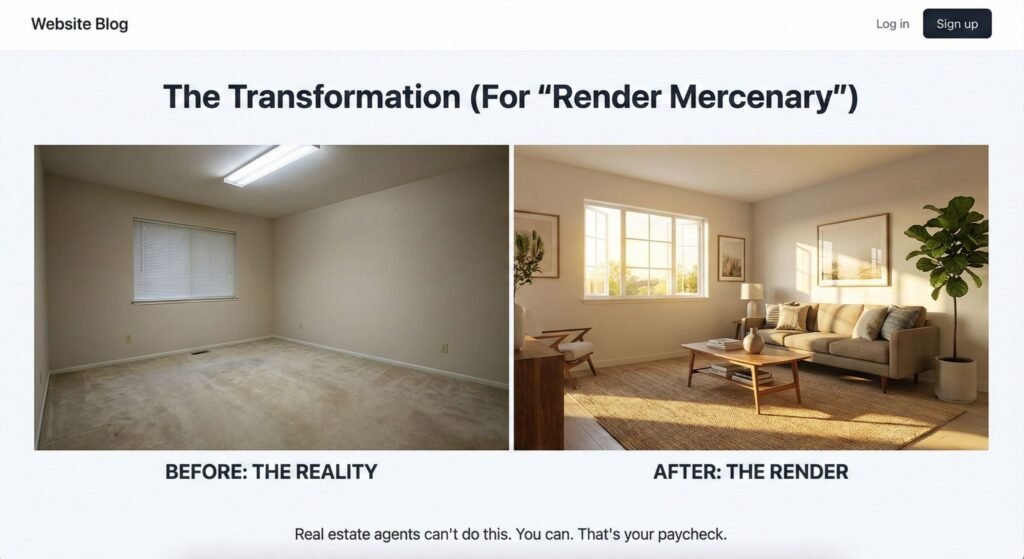
1. The “Render Mercenary” (Visualization Commissions)
You are already rendering for your studio projects. Why not do it for money?
The Hustle:Real estate agents, interior designers, and small developers need to sell their vision. They don’t have the time or skills to use Lumion or V-Ray. You do.
How to Start:Don’t just post on Fiverr and pray. Be aggressive. Go to local real estate listings. Find the agents selling “fixer-upper” homes. Email them and say: “I can take this empty living room and show you what it looks like fully renovated for $100.”Show them a before/after.It takes you two hours. It makes them thousands in commission. They will pay you gladly.
2. The Digital Asset Lord (Selling 3D Models)
How many times have you modeled a specific chair, a light fixture, or a parametric facade component for a project, only to never use it again?
The Hustle:Stop letting your digital trash rot on your hard drive. Turn it into passive income. Sites like TurboSquid, CGTrader, and Sketchfab are marketplaces for 3D assets.
How to Start:Package your models.Did you make a great set of mid-century modern furniture? Upload it.Did you create a complex grasshopper script for a facade? Sell the script.The key is volume. Upload one item a week . Over a year, that trickle of $10 sales becomes a steady stream of rent money. You do the work once, and you get paid forever.
3. The Competition Hunter (High Risk, High Reward)
This isn’t just about glory; it’s about the prize purse.
The Hustle:There are hundreds of student competitions running globally at any given moment. Some have free entry; some have small fees. But the winners often take home $1,000 to $5,000.
The Strategy:Don’t enter the massive, open-ended competitions like “Design a City on Mars.” You’ll drown in thousands of entries.Look for niche competitions. “Design a Bamboo Pavilion,” “Micro-Housing for 2 People,” or local municipal contests. The pool is smaller, and your odds are higher.Treat it like a sprint. Take a weekend, reuse old ideas from rejected studio projects, polish them, and submit.
4. The “CAD Gun for Hire” (Redrawing As-Builts)
It’s not glamorous, but it pays.
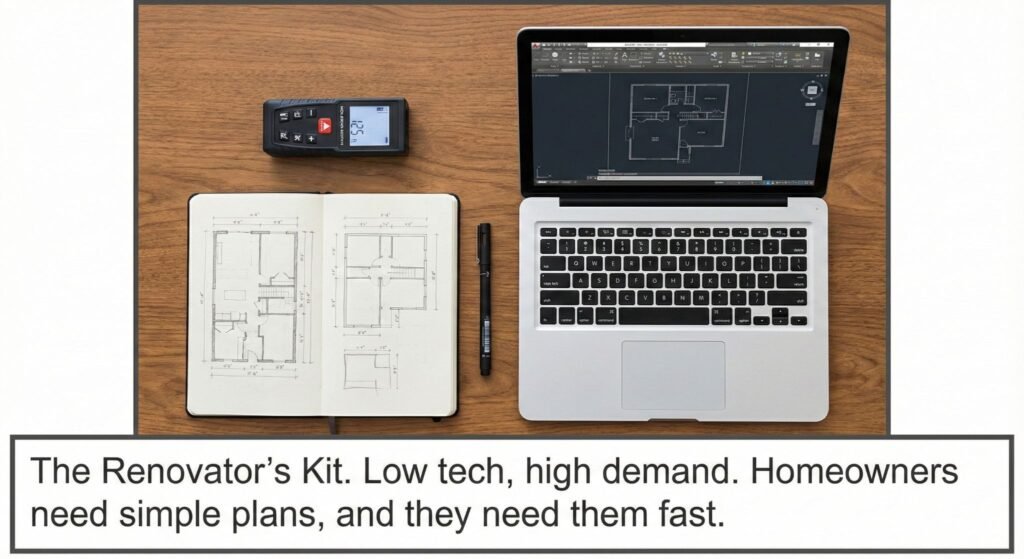
The Hustle:Contractors and homeowners often need “As-Built” drawings (plans of existing buildings) for permits or renovations. They don’t need a licensed architect for this; they just need someone who can measure and draw.
How to Start:Post on local community boards (like Nextdoor or Facebook groups). “Architecture Student available to measure and draw floor plans for renovations.”You show up with a laser measure and a sketchbook. You measure the house. You go home and draw it in CAD/Revit. You send the PDF.It is the easiest $300-$500 you will ever make.
5. The Tutor (Skill Arbitrage)
Remember how hard it was to learn Revit? Remember crying over Grasshopper tutorials?
The Hustle:There is always a first-year student who is crying over the same thing right now. Or an older architect who needs to transition from AutoCAD to BIM but is terrified of the interface.
How to Start:You are an expert relative to them.Offer “Crash Course” tutoring. “Learn the basics of V-Ray in 3 hours.”Charge $30/hour. If you teach a group of three students, that’s $90/hour. That is more than most junior architects make.
6. The Graphic Designer (The “Cheat” Code)
Architecture school is basically a 5-year graphic design degree in disguise. You know hierarchy, typography, color theory, and layout better than most marketing majors.
The Hustle:Logos, flyers, business cards, wedding invitations, presentation decks.
How to Start:Tell your non-architecture friends you do design. When your friend’s band needs a poster? You do it. When your cousin’s startup needs a pitch deck? You style it.
Use the Adobe Suite skills you already have. It takes you 30 minutes to make a flyer in InDesign that would take a normal person 5 hours in Word. Charge for that efficiency.

7. The Freelance Platform Grind (Upwork/Fiverr)
I saved this for last because it requires the most strategy.
The Hustle:Global freelancing. But be warned: You are competing with the whole world.
The Strategy:Don’t be a generalist. Do not post a gig saying “I will design your house.” You won’t get hired.Be a specialist.Post gigs for very specific micro-tasks:
- “I will convert your PDF floor plan to AutoCAD.”
- “I will Photoshop people and trees into your render.”
- “I will create a 3D section diagram from your model.” Specific tasks get specific clients. Once you get a few 5-star reviews on the small stuff, you can start charging for the big stuff.
The Bottom Line
You do not have to starve for your art. The skills you are learning, 3D modeling, spatial reasoning, graphic presentation are rare and valuable. The world is willing to pay for them, but they won’t knock on your dorm room door. You have to put yourself out there. Pick one of these side hustles. Try it for a month. Even if you only make an extra $200, that’s groceries for two weeks. But more importantly, it buys you freedom. It teaches you that you are not just a student; you are a business.